ClusterView: An AI-Powered SEO Keyword Clustering Tool
Smarter SEO Strategy, Powered by AI Keyword Clusters
The Challenge Summarized
Every SEO specialist knows the moment when one target keyword turns into a massive spreadsheet of related terms, modifiers, questions, and “maybe useful later” opportunities. The problem isn’t the lack of keyword data. It’s knowing how to turn that data into a clear keyword cluster.
SEO teams often need to manually:
- Research and manually create keyword clusters around a main anchor keyword
- Compare search volume, difficulty, rankings, and trends
- Spot quick wins, content gaps, and declining opportunities
- Turn scattered keyword exports into a focused content roadmap
Without a clear way to create, organize, and visualize keyword clusters, SEO planning can become slow, messy, and difficult to prioritize.
The Vision
The idea behind ClusterView was simple: keyword strategy should feel less like sorting through a giant spreadsheet and more like reading a map.
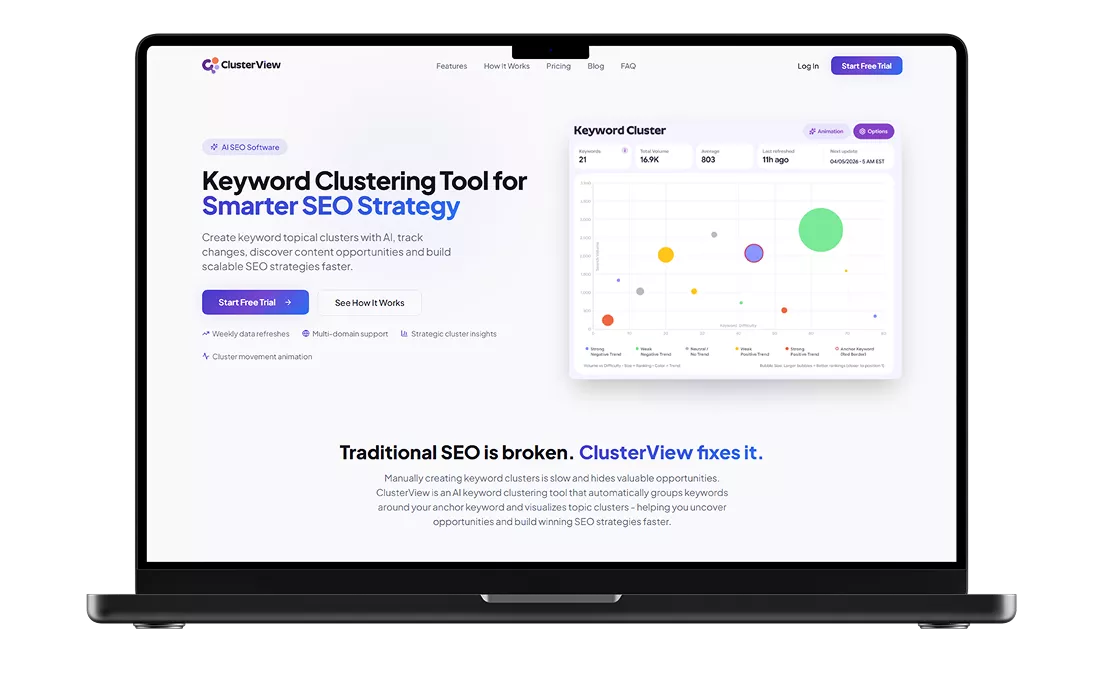
Instead of treating keywords as isolated search terms, ClusterView helps SEO specialists understand how related keywords work together around one main anchor keyword. The goal was to create a tool that could suggest supporting keywords, enrich them with SEO metrics, and show the full cluster visually so that users can quickly spot opportunities, gaps, and movement.
The tool needed to support the way SEO teams actually work: building topical authority, monitoring ranking trends, identifying quick wins, and turning keyword insights into a stronger content roadmap.

The Scopic Solution
Scopic developed ClusterView, an AI-powered keyword clustering and rank-tracking tool designed for marketing and SEO teams that need clearer prioritization, better visualization, and faster content planning.
With ClusterView, users can:
1. Enter a main anchor keyword
2. Generate AI-suggested supporting keywords
3. Select the most relevant terms for the cluster
4. Pull in SEO metrics like search volume, keyword difficulty, ranking position, ranking URLs, and ranking trends
5. Track how a specific domain ranks for each keyword
6. View keyword opportunities in an interactive bubble-style visualization
This gives SEO specialists a faster way to identify what needs attention: keywords that are improving, declining, underperforming, or worth targeting next.
ClusterView also supports content planning with AI topic suggestions. Users can select keywords from a cluster and generate blog article titles based on those terms, making it easier to turn cluster insights into content briefs, supporting pages, and topical authority plays.
The tool also allows users to animate keyword clusters and review historical trend behavior, making it easier to understand how ranking opportunities shift over time.


Skills Involved:
AnthropicGenAI (OpenAIGoogle)AI & Machine LearningCustom Software DevelopmentGenerative AI & Conversational AI
Other Projects