Table of Contents
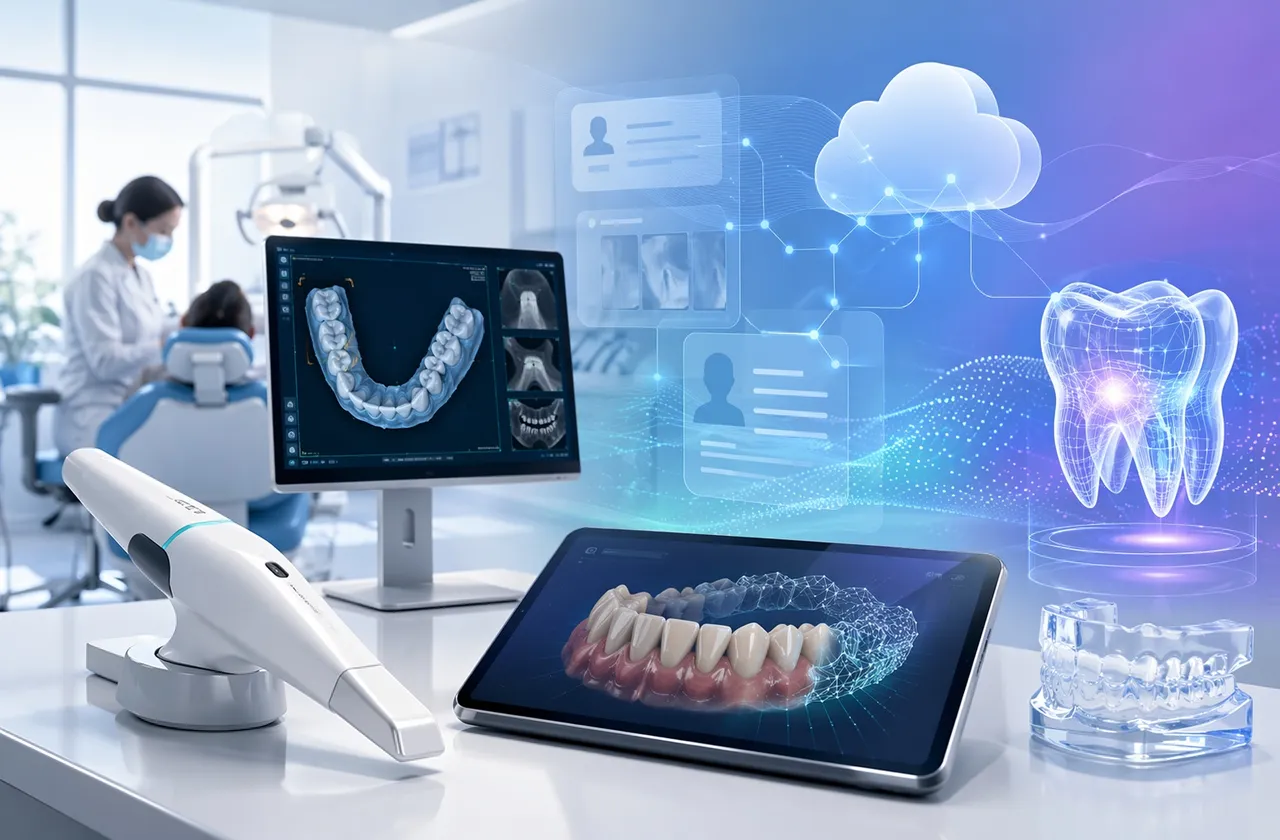
Nearly half of dentists are actively investing in new technologies, with 49% planning to increase spending over the next two years, a clear signal that practice leaders view advanced dental technology trends as essential, not optional. For founders, CTOs, and product managers building solutions in healthcare, this represents a critical inflection point where patient expectations, staffing pressures, and technological capability are converging simultaneously.
Staffing shortages are forcing practices to adopt digital tools to maintain operations, while AI and advanced imaging technologies are reshaping clinical workflows and patient engagement. This article breaks down the specific technologies transforming patient care in 2026, from intraoral scanning to AI-driven diagnostics, backed by the latest industry data. You’ll learn which innovations are gaining real traction, where investment is flowing, and what it means for your product roadmap.
Key Takeaways
- Dental practices are increasing technology investment as staffing pressure, patient expectations, and clinical workflow demands rise.
- AI diagnostics, digital impressions, 3D printing, and intraoral imaging are improving speed, precision, and patient communication.
- Cloud-based practice management, patient engagement apps, and tele-dentistry are becoming essential for operational efficiency.
- The strongest dental technology investments are those that improve both clinical outcomes and practice profitability.
- For founders and product teams, the opportunity is building integrated dental software that connects imaging, records, scheduling, patient engagement, and compliance.
1. AI-Powered Diagnostics and Radiographic Imaging
Diagnostic errors and inconsistent image interpretation have long plagued dental practices, delaying treatment and eroding patient trust. AI-enhanced radiographic systems now analyze dental images in real time, detecting cavities, bone loss, and implant complications with precision that rivals or exceeds human interpretation. These systems integrate seamlessly with existing workflows by flagging areas of concern, suggesting follow-up protocols, and feeding structured data directly into patient records and digital dentistry solutions.
AI diagnostic capabilities:
- Cavity detection
- Bone loss identification
- Implant complication alerts
- Radiographic image analysis
- Structured data capture
- Follow-up recommendation support
Scopic’s OrthoSelect AI case study also shows how AI can support orthodontic treatment planning beyond diagnostics, with AI-powered teeth segmentation, workflow automation, 3D printing integration, and tools that help improve bracket placement and treatment outcomes.
For practice leaders and software decision-makers, the business case is clear: AI diagnostics reduce diagnostic errors, accelerate patient throughput, and create a defensible competitive moat. The question is no longer whether to adopt these tools, but how quickly to integrate them into your clinical and operational infrastructure.
2. High-Precision Digital Impressions and CAD/CAM Integration
Traditional impression materials, which are sticky, uncomfortable, and prone to distortion—have frustrated patients and slowed treatment timelines for decades. High-precision digital impressions paired with CAD/CAM (Computer-Aided Design/Computer-Aided Manufacturing) systems eliminate this friction while accelerating treatment delivery. Intraoral scanners replace alginate materials with fast, comfortable digital scans that patients prefer, while simultaneously generating files that enable dentists to visualize and communicate treatment outcomes before work begins.
Digital impression benefits:
- Faster scan capture
- Better patient comfort
- More accurate virtual models
- Easier treatment visualization
- Faster lab communication
- Improved restoration planning
Scopic’s ByteMe 3D Treatment Viewer case study is a strong example of this trend in practice. Scopic helped build a 3D application for a teledentistry platform that stores and displays 3D teeth impressions, allowing dentists and orthodontists to analyze patient cases and oversee treatment planning more effectively. This kind of software shows how digital impressions can move beyond scan capture and become part of a broader treatment planning workflow.
55% of dentists surveyed identify intraoral scanners as revolutionary for their practice, signaling a decisive shift toward digital capture. CAD/CAM technology reduces costs by eliminating physical prototypes and commands milling machines to produce precise restorations faster than traditional methods, often delivering results to patients in a single visit rather than weeks. This speed advantage translates directly into competitive differentiation for practices adopting the technology.
3. Synchronous and Asynchronous Tele-Dentistry Expansion
The global teledentistry market reached USD 860.8 million in 2022, driven by patient demand for convenience and the operational efficiency gains practices realize by reducing chair time for preliminary assessments. Remote consultations, diagnosis, and treatment planning are now core components of modern dental practice, with both synchronous (real-time video consultations) and asynchronous (store-and-forward) models gaining traction.
Synchronous tele-dentistry enables live consultations between patients and dentists, while asynchronous approaches allow patients to submit images, scans, and case details for review and feedback, reducing scheduling friction and enabling dentists to manage workload more flexibly. Companies like MouthWatch and Denteractive Solutions are leading adoption by building platforms that integrate seamlessly with existing practice management systems.
Tele-dentistry use cases:
- Preliminary consultations
- Post-treatment follow-ups
- Image review
- Treatment planning
- Specialist referrals
- Patient triage
According to Grand View Research, the teledentistry market is projected to expand at a compound annual growth rate of 16.7% through 2030, driven by rising demand for accessible care and reduced travel costs for patients. For dental practice leaders and software decision-makers, the strategic question is no longer whether to adopt tele-dentistry, but how to implement it in ways that improve patient outcomes and practice profitability. Practices that integrate both synchronous and asynchronous workflows—supported by robust dental imaging software—will capture market share from those still operating on traditional in-office-only models.
4. High-Speed 3D Printing for Chairside Prosthetics
Dependency on external laboratories and multi-day turnaround times have long constrained dental practices’ ability to deliver same-day restorations. High-speed 3D printing technology enables dentists to design and produce crowns, bridges, and other restorations in-office during a single patient visit, eliminating the multi-day turnaround that traditional lab workflows require. This capability transforms patient experience by reducing appointment frequency while improving fit precision through direct anatomical modeling.
Half of dentists surveyed believe 3D printing will meaningfully enhance their practice capabilities. Practices adopting chairside 3D printing can iterate designs rapidly, reduce material waste, and maintain tighter control over prosthetic specifications. Early adopters report faster case completion and higher patient satisfaction due to same-day delivery of custom restorations.
3D printing advantages:
- Same-day restorations
- Faster case completion
- Reduced lab dependency
- Better fit precision
- Lower material waste
- Improved patient satisfaction
According to the ADA Science & Research Institute, 50% of dentists polled indicated that 3D printing would improve their practice this year, reflecting growing confidence in the technology’s clinical and operational value. For practice leaders and software developers, the business case centers on operational efficiency and competitive differentiation. Organizations investing in chairside 3D printing infrastructure—or building dental software development solutions that integrate with these systems—position themselves to capture market share in an industry increasingly demanding faster, more personalized care delivery.
5. Minimally Invasive Laser Dentistry Adoption
Patient anxiety around drills and scalpels has historically driven appointment avoidance and delayed treatment. Laser-assisted procedures now account for a growing share of cosmetic and restorative dental treatments, driven by their precision, reduced patient discomfort, and faster healing times compared to traditional methods. Practices adopting laser technology report higher patient satisfaction and the ability to complete complex procedures in fewer appointments—a competitive advantage in markets where patient experience directly influences referrals and retention.
Dentists increasingly view laser systems as essential equipment for gum contouring, cavity preparation, and teeth whitening, with leading practices integrating them into their standard treatment protocols. The technology addresses longstanding patient pain points while enabling dentists to perform procedures with greater control and less tissue trauma.
Laser dentistry use cases:
- Gum contouring
- Cavity preparation
- Teeth whitening
- Soft tissue procedures
- Cosmetic treatments
- Post-operative healing support
For dental practice owners and practice management software developers, minimally invasive laser adoption represents both an operational and a revenue opportunity. Decision-makers should evaluate how their practice management systems, imaging platforms, and patient communication tools can support laser-based workflows, from pre-procedure imaging to post-operative care tracking. As laser dentistry becomes more mainstream, the practices that streamline scheduling, documentation, and patient education around these procedures will differentiate themselves in an increasingly competitive market.
6. Cloud-Based Practice Management Software (PMS)
The global dental practice management software market reached USD 1.5 billion in 2022, signaling a fundamental shift in how dental practices operate. Cloud-based PMS platforms have become central to modern practice administration, enabling dentists to consolidate appointment scheduling, patient records, billing, and compliance into a single, accessible system. Unlike legacy on-premise software, cloud solutions offer scalability and cost efficiency—practices pay for what they use and scale up as they grow, without managing expensive servers or IT infrastructure.
According to the same Grand View Research, the dental practice management software market is expected to grow at a CAGR of 13.6% from 2023 to 2030, driven by rising demand for efficient practice management and growing awareness of cloud-based software benefits. North America leads adoption, where established practices and new entrants alike are migrating to cloud platforms to reduce operational overhead and improve patient experience.
Cloud PMS capabilities:
- Appointment scheduling
- Patient record access
- Billing management
- Compliance support
- Multi-location access
- Integration with imaging and engagement tools
For founders and product leaders evaluating dental software investments, the trajectory is clear: cloud-based PMS is no longer a differentiator. It’s table stakes. The priority now shifts to integration capabilities, user experience, and compliance features that justify the move from legacy systems.
Need a more connected dental software ecosystem? Scopic develops dental imaging and practice software solutions that support better workflows, patient care, and system integration.
7. AI-Driven Patient Engagement Apps
No-shows and poor patient compliance have long eroded practice profitability and treatment outcomes. AI-powered engagement platforms now automate appointment reminders, personalized treatment recommendations, and post-care follow-ups—reducing no-shows while improving patient compliance. Leading dental software providers are embedding natural language processing to enable two-way communication, allowing patients to ask questions and receive instant responses without staff intervention.
Patient engagement features:
- Automated reminders
- Two-way messaging
- Personalized treatment recommendations
- Post-care follow-ups
- No-show reduction workflows
- Patient education prompts
The global patient engagement software market reached US$ 30.8 billion in 2025. The same research states, that the patient engagement software segment is projected to expand to US$ 109.6 billion by 2033, growing at a compound annual growth rate of 17.2% through 2033.
For dental practice leaders and software decision-makers, this underscores a critical opportunity: practices that integrate AI-driven engagement tools now will capture competitive advantage in patient retention and operational efficiency. Evaluating solutions that offer seamless integration with existing practice management systems should be a priority in 2026.
8. Robotic-Assisted Dental Surgical Procedures
Complex extractions, implant placements, and bone grafting demand submillimeter precision that manual techniques struggle to deliver consistently. Surgical robots are moving beyond the operating theater into dental practices, where precision-guided systems handle these procedures with submillimeter accuracy. Unlike traditional manual techniques, robotic-assisted procedures reduce tremor, standardize surgical pathways, and enable pre-operative planning that translates directly into shorter chair time and more predictable outcomes.
Robotic surgery advantages:
- Submillimeter precision
- Reduced hand tremor
- Standardized surgical pathways
- Better pre-operative planning
- Shorter chair time
- More predictable outcomes
The technology is gaining traction among high-volume practices and dental centers of excellence, where consistency and patient safety are competitive differentiators. According to the World Economic Forum, robots are increasingly deployed in surgical procedures across healthcare, enhancing precision and potentially improving patient outcomes—a principle now extending into specialized dental surgery.
Dental practices investing in robotic-assisted systems today are positioning themselves to capture market share from competitors still relying on manual techniques, particularly as patient expectations for minimally invasive, data-driven care continue to rise. For founders and product leaders, the opportunity lies not in building dental robots from scratch, but in integrating with existing robotic platforms, developing software that bridges imaging data to surgical guidance, or creating training and credentialing systems that help practices adopt these tools confidently.
9. High-Definition Intraoral Cameras for Patient Education
The global intraoral cameras market reached USD 218.4 million in 2022, with demand accelerating as dental practices recognize the power of visual communication. High-definition intraoral cameras have shifted from a luxury diagnostic tool to a patient engagement essential—enabling dentists to display real-time scans directly to patients, transforming how treatment plans are explained and understood.
Practices using modern imaging systems report faster patient consultations and higher treatment acceptance rates, since patients can now see exactly what the dentist sees. The technology spans multiple formats—from fiber optic and USB-connected devices to wireless solutions—allowing practices to choose systems that fit their workflow. By producing digital files that visualize oral conditions and projected outcomes, dentists reduce patient anxiety and build confidence in recommended procedures.
Intraoral camera benefits:
- Real-time patient education
- Better treatment explanation
- Faster consultations
- Higher case acceptance
- Image-based documentation
- Stronger patient trust
For dental software and practice management platforms, this trend signals a clear opportunity: integrating intraoral imaging workflows into your product roadmap—whether through direct camera support, image annotation tools, or patient portal visualization—positions your solution as essential infrastructure for modern practices competing on patient experience.
10. Blockchain for Secure Patient Record Management
Patient data breaches in healthcare have exposed over 700 million records since 2009, with dental practices increasingly targeted due to legacy systems and fragmented record-keeping. Blockchain technology is emerging as a decentralized solution to secure patient information, enabling immutable audit trails and patient-controlled access to their own dental records across multiple providers.
The trend reflects a shift toward patient empowerment and interoperability. Dental networks like Dentegra and emerging blockchain-based health platforms are piloting systems where patients hold cryptographic keys to their records, reducing dependency on centralized databases that are vulnerable to ransomware attacks. In practice, this means a patient can grant temporary access to specialists without storing sensitive data on a practice’s servers—a critical advantage for multi-location dental groups and DSOs managing compliance across jurisdictions.
Blockchain record-management benefits:
- Immutable audit trails
- Patient-controlled access
- Temporary specialist permissions
- Reduced centralized data exposure
- Better interoperability
- Stronger record traceability
The challenge remains adoption and standardization. While blockchain offers security benefits, dental practices must weigh implementation costs and integration complexity against their current infrastructure. For founders and CTOs evaluating patient data platforms, blockchain should be considered not as a standalone solution but as one layer in a broader security architecture that includes encryption, access controls, and regular audits.
How to Prioritize Dental Technology Investments
Dental practices do not need to adopt every new technology at once. The strongest starting point is usually the area where the practice has the clearest operational bottleneck, such as slow treatment planning, high no-show rates, inefficient record management, or poor patient communication.
Practices focused on clinical precision may prioritize AI diagnostics, intraoral imaging, digital impressions, or 3D modeling tools. Practices struggling with administration may see faster value from cloud-based PMS, patient engagement apps, or tele-dentistry workflows.
For software founders and product teams, this means dental technology should be mapped to specific practice pain points. The most valuable products will not simply add features, but help practices save time, improve treatment acceptance, reduce friction, and deliver better patient experiences.
ROI of Dental Technology Adoption
The ROI of dental technology is not limited to direct cost savings. It can also come from faster case completion, fewer missed appointments, higher treatment acceptance, better patient retention, and more efficient staff workflows.
For example, intraoral cameras and 3D visualizations can help patients better understand recommended treatments, which may improve case acceptance. Cloud PMS and AI-driven engagement tools can reduce administrative load, while 3D printing and digital impressions can shorten treatment timelines.
The key is to evaluate technology through both clinical and business outcomes. Before investing, practices should ask whether the tool improves patient care, reduces manual work, integrates with existing systems, and supports measurable practice growth.
FAQ
What are the biggest dental technology trends in 2026?
The biggest dental technology trends in 2026 include AI-powered diagnostics, digital impressions, CAD/CAM integration, tele-dentistry, 3D printing, laser dentistry, cloud-based practice management, patient engagement apps, robotic-assisted surgery, intraoral cameras, and secure patient record systems. These technologies are helping practices improve diagnostic accuracy, reduce treatment timelines, and create better patient experiences. The strongest trend is integration: practices want tools that work together across imaging, scheduling, records, treatment planning, and patient communication.
How is AI being used in dental practices?
AI is being used in dental practices to support radiographic image analysis, cavity detection, bone loss identification, treatment planning, patient engagement, and workflow automation. These tools can help dentists identify areas of concern faster and create more consistent documentation. AI can also support patient communication by automating reminders, follow-ups, and personalized education. However, AI should support clinical judgment, not replace it, so practices still need human review, privacy safeguards, and clear accountability.
Are digital impressions better than traditional dental molds?
Digital impressions can be better than traditional molds in many cases because they are faster, more comfortable for patients, and less prone to physical distortion. They also create digital files that can be used for treatment visualization, lab communication, CAD/CAM workflows, and 3D printing. For practices, this can reduce turnaround time and improve communication with both patients and dental labs. Traditional impressions may still be used in some situations, but digital scanning is becoming a practical standard for modern dental workflows.
How much should a dental practice invest in new technology?
The right investment depends on the practice’s size, patient volume, current systems, and operational pain points. A smaller practice may start with cloud PMS, patient engagement software, or intraoral cameras, while a larger practice or DSO may prioritize AI diagnostics, 3D printing, or more advanced imaging integrations. The goal is not to buy the most advanced tool first, but to choose technology that solves a measurable problem. Practices should evaluate ROI through time saved, patient retention, case acceptance, treatment speed, and staff efficiency.
Is dental technology worth it for smaller practices?
Yes, dental technology can be worth it for smaller practices when it is chosen carefully. Smaller practices often benefit most from tools that reduce administrative burden, improve patient communication, and make treatment explanations easier. Cloud-based PMS, appointment reminders, intraoral cameras, and digital imaging tools can create visible workflow improvements without requiring a full technology overhaul. The key is to avoid disconnected tools and focus on systems that integrate well with the practice’s existing workflow.
If you’re building or modernizing a dental technology platform, Scopic can help you design secure, scalable software that supports clinical precision and patient-centered care.
Conclusion
The dentist industry trends reshaping 2026 point to a clear trajectory: practices are committing increased budgets to technology, with 55% viewing intraoral scanners as revolutionary and 50% expecting 3D printing to meaningfully improve their practices. AI-powered diagnostics, CAD/CAM integration, and tele-dentistry are converging to enable faster diagnostics, precision treatment planning, and enhanced patient outcomes. These advanced dental technology trends represent a systemic shift toward data-driven, patient-centered care delivery.
Over the next two to three years, expect these technologies to become standard rather than competitive advantage. With 53% of dentists planning to invest up to $5,000 in software and IT infrastructure, the barrier to adoption is lowering, and practices that delay modernization risk falling behind. The real opportunity lies not in adopting individual tools, but in integrating them into cohesive systems that streamline operations and elevate patient care.
If you’re building software solutions for dental practices or modernizing your existing platform, Scopic Software’s team can help you architect systems that align with these industry shifts. Explore our custom software development services to turn these trends into competitive advantage.
About Top 10 Dental Technology Trends Transforming Patient Care
This guide was written by Scopic Team
Scopic provides quality and informative content, powered by our deep-rooted expertise in software development. Our team of content writers and experts have great knowledge in the latest software technologies, allowing them to break down even the most complex topics in the field. They also know how to tackle topics from a wide range of industries, capture their essence, and deliver valuable content across all digital platforms.