Table of Contents
Listen to article – This audio is generated by AI
The goal shouldn’t just be to have efficient software; it should be to have bespoke software that meets your customers’ needs in ways standard solutions cannot. Why?
Because consumers want personalization. Globally, 64% of consumers prefer to buy from companies that tailor their experiences to their wants and needs.
In other words, creating a custom solution that responds to your customers’ needs while supporting your company’s workflows and goals is increasingly important. As more businesses adopt bespoke software, the last thing you want is a system your business has to adapt to rather than one that adapts to your business.
Keep reading to explore how bespoke software compares to off-the-shelf software, the different types of systems businesses can create, and the features they commonly include.
TL;DR: Bespoke software is a custom solution developed around a company’s specific workflows, goals, and user needs. It can take many forms, including CRM systems, e-commerce platforms, healthcare applications, and operations management tools. Compared with off-the-shelf software, it offers greater control, flexibility, and scalability but generally costs more and takes longer to implement.
What is Bespoke Software?
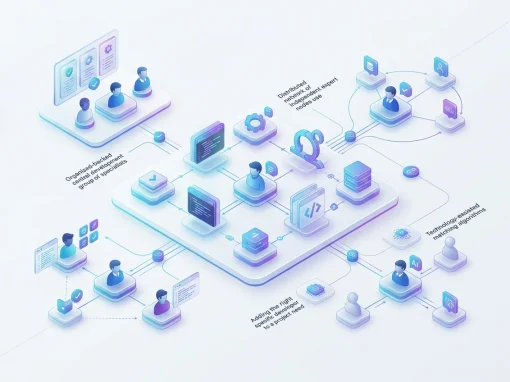
Bespoke software, or custom software, is tailor-made software built for the client’s specific requirements. It can be adjusted, modified, or adapted to fit the needs of the business.
Custom software can be developed in-house or in partnership with experienced developers. Either approach enables businesses to build features around their specific requirements, improve scalability and security, and deliver a tailored user experience.
Bespoke vs. Off-the-Shelf Software: A Comparative Overview
How does bespoke software differ from off-the-shelf software?
As mentioned, bespoke software solutions are custom solutions catered to the needs of a client or business. Off-the-shelf (OTS) software, on the other hand, has been developed for the mass market and is designed for a broad range of uses.
Let’s take a look at some of their key differences.
| Factor | Bespoke Software | Off-the-Shelf Software |
| Customization | Tailored to specific workflows and requirements | Limited to available settings and add-ons |
| Cost | Higher upfront and potential maintenance costs | Lower upfront cost, but fees can add up with more users, features, and add-ons |
| Implementation | Longer development and testing process | Faster to configure and deploy |
| Support | Tailored support from the development team | Vendor-managed support and updates |
| Scalability | Designed to accommodate changing needs | Limited by the platform’s capabilities |
| Integration | Built to connect with specific systems | Limited to supported integrations and APIs |
“The real cost of a legacy system is not just what you pay to keep it running. It is the speed you sacrifice, the talent you cannot attract, the features you cannot ship, and the customers you eventually lose to a competitor who modernized two years ago.”
— Ian Schwikkard, Sales Account Executive at Scopic
While bespoke software may have a higher upfront cost, it can also drive a greater long-term return on investment by offering scalability, security, and tailored features that attract and retain customers.
For businesses that require some customization but don’t have the time required for custom software development, low-code or no-code techniques are efficient alternatives.
As the name suggests, low-code development requires little knowledge of coding, while no-code development uses pre-built templates that require zero coding. These options are not as flexible or customizable as bespoke applications, but they do provide a degree of customization, acting as a halfway point between bespoke and OTS solutions.
Types of Bespoke Software and Systems
To get a better idea of how bespoke software solutions are used in the real world, let’s compare 8 bespoke software examples:
| Type of Software | Common Industries | Key Features | Example | Benefits |
| Health Management Software (HMS) | Healthcare, health insurance, pharmaceuticals, medical research | Integration, customer relationship management, data analysis, automation, tracking and visibility, order management |
Informatica – Healthcare solution that automates the data collection and analysis process
|
Reduced operational costs, data security, compliance, better resource allocation, enhanced decision-making |
| Customer Relationship Management (CRM) Systems | Sales, marketing, customer service | Contact management, analytics, lead management, dashboard, sales automation | Abby Connect – provides live receptionist and chat support services | Improved customer relationships, data security, increased sales, streamlined communication |
| e-commerce Platforms | Retail, B2B, B2C | Product catalog, shopping cart, payment gateway integration, promotions, customer management | Mobile Outfitters – Sells high-quality mobile accessories worldwide | Enhanced online shopping experience, flexible payment options, targeted marketing, the ability to adapt to changing market trends |
| Custom Marketplaces for Agriculture | Agriculture, livestock, food processing, and distribution | Product listings, online ordering, inventory management, communication tools, weather and crop data integration | On Farm – A marketplace where assessors and vendors easily manage cattle assessment data | Efficient market access, transparency, improved sales, enhanced agricultural productivity, support for local agriculture |
| Operations Management Software (OMS) | Manufacturing, logistics, supply chain management, healthcare | Production scheduling, inventory tracking, demand forecasting, cloud computing, regulatory compliance | Medical Case Management System – Designed to facilitate mobile health providers in managing their businesses online | Improved security and productivity, better integration, maintenance and support, tailored workflows, enhanced communication |
| Content Management Systems (CMS) | Media, publishing, marketing, advertising, e-commerce | Analytics, SEO tools, content creation, editing, publishing, content templates | CNKT Mobile App – an app where users can freely discuss real issues or topics | Better security, scalability, branding, user management, content control, improved performance |
| 3D Software | Architecture, construction, manufacturing, entertainment | 3D modeling, animation, camera control, import/export, rendering, CAD integration | SketchList 3D – 3D woodworking design software that streamlines the entire design process | Design flexibility, better customer engagement, better automation, efficient prototyping, seamless integration |
| Medical Imaging Software | Healthcare, dentistry, veterinary medicine, and medical research | Image acquisition, multi-modality support, image processing, 3D reconstruction, patient data management | Orthoselect – 3D modeling and 3D printing software for dentistry and orthodontics | Better diagnostic accuracy, scalability, increased data security, quick adaptation to new regulations |
Common Features and Functions of Bespoke Software
Many businesses opt for bespoke software development because of the custom features and functions they provide. Let’s explore some of these features in more detail:

Customized User Interface (UI) and Experience (UX)
Bespoke applications allow businesses to create an intuitive user experience and on-brand user interface that appeals to their target audience. Since there is no one-size-fits-all solution to UI/UX design, creating a custom design is crucial to meeting the specific needs of a business and requires careful consideration of the project’s requirements and goals.
Integration Capabilities
Bespoke application software can be designed to integrate with existing systems, databases, and APIs. This enhances efficiency and data consistency and reduces manual data entry.
Scalability and Flexibility
Bespoke systems can be designed to scale as an organization grows. This allows them to adapt to changing business needs and market conditions, such as a growing user base.
Advanced Security Features
In custom software solutions, developers can implement secure SDLC, the practice of incorporating security principles from the beginning of a project to the end, helping organizations identify and address potential security issues early on. There are also custom security features that can be built into bespoke systems to address the specific risks and compliance requirements of distinct industries. An example of this is HIPAA compliance for software development, an important requirement and regulation in the healthcare industry that protects the privacy, security, and integrity of protected health information.
Data Analysis and Reporting
Custom software development can include specialized data analysis tools and custom reporting features to provide businesses with insights that are tailored to their unique needs. This may include domain-specific analytics, real-time data analysis, advanced algorithms, and more.
Automation of Business Processes
Bespoke application software is made to meet the specific requirements of a business, meaning that it’s an all-in-one solution to your business needs. Having a tailored system automates specific business processes, reducing the workload for employees and improving efficiency and accuracy.
Support and Maintenance
Since bespoke solutions cater to the needs of their clients, there are often personalized support and maintenance plans that accompany them. This ensures long-term success by working to address issues, improve functionality, and adapt to changing requirements.
Mobile and Remote Accessibility
One of the features that developers can implement is mobile access and remote capabilities, an important feature in today’s modern work environment.
AI-Powered Features
Bespoke software can incorporate AI features tailored to a company’s data, workflows, and users. These may include virtual assistants, recommendation engines, predictive analytics, intelligent document processing, and other tools that help businesses automate tasks, personalize experiences, and make more informed decisions.

What are the Advantages and Disadvantages of Bespoke Software?
Companies must consider the pros and cons of bespoke applications to better understand if they align with their business goals.
Advantages
- Tailored solutions: Every business is different, and only bespoke software development can guarantee that it addresses the specific needs, workflows, and processes of an organization.
- Best return on investment: Custom features that cater to your target audience will help attract and retain customers, therefore increasing your ROI.
- Easy to scale: The ability to scale up and down as the business’ needs change is crucial in today’s constantly changing environment. This allows businesses to grow without sacrificing quality or the need to change software.
- Full ownership and control: Organizations have full ownership and control over custom software, allowing them to make changes, enhancements, and updates based on their timeline and priorities.
- Better security: Developers can implement security best practices tailored to the needs of the business. This makes it easier to implement highly secure encryption methods, protect sensitive data, and comply with industry-specific regulations.
- Better integration: As mentioned, bespoke systems have better integration with new and existing systems, therefore improving accuracy and efficiency.
- Long-term time savings: Although bespoke applications typically take longer to develop and implement, they can ultimately save time by streamlining workflows and reducing training needs.
- Potential cost savings: Although bespoke software requires a higher upfront investment and ongoing maintenance, it may reduce long-term costs by eliminating unnecessary licensing fees, costly workarounds, and reliance on multiple software tools.
Disadvantages
- High initial costs: Software that’s tailored to the clients’ needs has higher upfront costs than OFS software. Though it does have a better ROI in the long run, high initial costs may be out of reach for smaller companies.
- Longer development time: Custom software is built from scratch, so interested companies should start development ahead of time so they can accommodate the time requirements.
- Risk of scope creep: Scope creep can lead to additional costs and time. An experienced software development company will know how to handle this, setting clear expectations and timelines from the beginning.
Our Expertise in Bespoke Software and Case Studies
At Scopic, we have 20 years of experience as a software development company. Our team of tech experts has experience creating custom solutions that are tailored to your business’ unique requirements, which include bespoke web development, desktop, and mobile development.
To get an idea of our previous work, here are some of our favorite bespoke application software projects:
RecipeIQ
RecipeIQ is a nutrition calculator app that provides nutritional information for any recipe taken from a magazine, newspaper, cookbook, or online. Our team created the application from scratch, developing a tech stack that includes e-commerce, image processing algorithms, SQL, HIPAA compliance, and more.
In less than 6 months, they received over 4,500 downloads, which has since grown due to social influencer campaigns and the implementation of ASO best practices.
OrthoSelect
OrthoSelect partnered with Scopic to develop modeling software that creates 3D models of patients’ teeth. Our developers carefully created a tech stack that includes 3D Graphics, VTK, Medical Software, Open GL, and more. We also proposed feature enhancements such as bracket adjustment, super imposition, and results simulations.
Today, OrthoSelect handles 10,000+ cases monthly for orthodontists around the world.
Codeaid AI Interviewer
Codeaid partnered with Scopic to make technical recruitment more efficient, consistent, and cost-effective. Our team developed an AI-powered interviewer that analyzes candidates’ CVs, generates skill-based questions, and evaluates responses in real time.
Since its launch, Codeaid AI Interviewer has invited 471 candidates and successfully graded 294, helping streamline the recruitment process while improving the candidate experience.
MedCAD MLOps
MedCAD needed a more efficient way to manage the complex machine learning workflows behind its medical imaging technology. Scopic built an automated MLOps framework that streamlined model retraining and validation while providing greater traceability across datasets, code, and model configurations.
With the new framework in place, model delivery became 50–60% faster, helping MedCAD accelerate development while maintaining the auditability needed for healthcare QA and compliance.
Future Trends and Innovations in Bespoke Software
Just as consumers’ and businesses’ needs are constantly changing, bespoke software development must continually adapt to new technologies and market demands. Custom software development companies are increasingly implementing generative AI, machine learning, and agentic AI to provide advanced analytics, predictive capabilities, and automation.
These technologies enable features such as natural language interfaces, AI business assistants, and intelligent automation. Agentic AI takes these capabilities even further. Unlike traditional AI assistants that primarily respond to prompts, AI agents can complete multi-step workflows across connected systems, such as updating CRM records, routing support cases, preparing reports, and scheduling follow-up actions.
With the right governance and human oversight, these tools can help businesses automate more complex processes while maintaining control.
Blockchain technology is also being applied in use cases that require greater transparency and traceability. With blockchain, developers can track and verify transactions and records to support various business needs, such as supply chain management, identity verification and authentication, and health records management.
And as remote work and collaboration among international teams become more common, cloud-native development continues to gain traction. The cloud computing market is expected to reach $2.28 trillion by 2030, growing at a CAGR of 12.0% from 2025 to 2030.
Cloud application development gives users access to remote data centers, allowing for real-time updates, advanced security, and scalability.
Custom software is tailored to deliver highly personalized experiences, and emerging technologies can help businesses increase user satisfaction and engagement.
Final Thoughts
Bespoke software offers businesses an opportunity to create solutions that align with their current and future goals. With an increasing number of businesses trying to create an online presence, the use of tailored features helps businesses outperform competitors and improve their brand awareness, customer loyalty, and overall sales.
Anyone interested in bespoke software solutions should set clear goals, outlining who their target audience is, what features may interest them, and the overall idea behind their project. At Scopic, we know exactly how to bring these ideas to life, working with our prospective clients to set clear expectations from the beginning.
If you’re interested in learning more about our software development services, contact us for a quote.
FAQs
How to make custom software?
Software product development begins with defining the project’s goals, requirements, target users, and market. The process typically includes competitive research, product roadmapping, resource planning, UX/UI design, development, testing, deployment, and ongoing maintenance.
How much does bespoke software development typically cost?
Bespoke software development may cost $50,000 to $350,000 or more, depending on the project’s complexity, required features and functionality, and technology stack.
How long does it take to develop bespoke software?
The development time depends on many factors, including the complexity of the project, scope, features, and more. Depending on the project, it can take anywhere from a few months to over a year.
Can bespoke software be integrated with existing systems and technologies?
Yes, bespoke software can be created to seamlessly integrate with existing systems, databases, and APIs.
How to know if bespoke software is right for your business?
Bespoke software may be right for your business if off-the-shelf software doesn’t meet your requirements, your business is growing or is expected to grow in the future, your company has a unique business model, or you think custom features will help you reach a larger client base.
Is bespoke software suitable for small businesses or startups?
Yes. Bespoke software can be suitable for small businesses and startups because it can scale as they grow and adapt to changing requirements. However, they should carefully consider their budget, timeline, and available resources before investing.
How to choose the right development partner?
When choosing a software development company, consider their expertise in bespoke solutions, past reviews, level of communication, methodologies, and portfolio. It’s recommended to select a company with AWS partner solutions, such as cloud native development, AWS architecture, AWS cloud, and backup and recovery services, among others. For more information, check out our guide on how to choose a software development company.

About Bespoke Software Guide
This guide was authored by Baily Ramsey, and reviewed by Sergij Rylskyj, a Technical Lead with experience in leading and delivering complex software and application development projects.
Scopic provides quality and informative content, powered by our deep-rooted expertise in software development. Our team of content writers and experts have great knowledge in the latest software technologies, allowing them to break down even the most complex topics in the field. They also know how to tackle topics from a wide range of industries, capture their essence, and deliver valuable content across all digital platforms.