
Table of Contents
Listen to article
Manufacturing is entering a new era of intelligent automation, where AI agents are bridging the gap between traditional systems and autonomous, data-driven operations.
And with the global AI agents market projected to grow at a CAGR of 49.6% from 2026 to 2033, it’s clear that companies are quickly prioritizing the adoption of these agents.
This means manufacturers can achieve more efficient predictive maintenance, quality control, production planning, and supply chain optimization with less human intervention.
Put simply, AI agents for manufacturing are no longer just a solution for the future; they are already reshaping the industry today and will continue to drive the next generation of smart factories.
Keep reading to learn about the benefits of AI agents in manufacturing, how they work in smart manufacturing environments, and real-world use cases to better understand how they’re being used today.
What Are AI Agents for Manufacturing?
AI agents for manufacturing are intelligent software systems designed to analyze data, make decisions, and perform tasks with limited human intervention. Within manufacturing environments, these agents can monitor machine performance, identify production issues, remove production bottlenecks, and help teams make faster, more informed decisions across areas like maintenance, quality control, and production planning.
By combining machine learning, large language models, real-time data analysis, and automation workflows, agentic AI for manufacturing can continuously learn from operational data, recommend actions, and help create smarter, more efficient factory operations.
AI Agents vs. Traditional AI vs. Automation in Manufacturing
As manufacturing continues to evolve, agentic AI manufacturing is emerging as the next step beyond traditional automation. While automation follows predefined rules and traditional AI focuses on analyzing data and providing insights, AI agents can adapt, make decisions, and take action to support more autonomous operations.
The key differences include:
| Technology | What It Is | Primary Role | Capabilities | Manufacturing Use Cases |
| Traditional Automation | Systems programmed to perform specific tasks | Automate repetitive processes | Improves speed, consistency, and efficiency for predictable operations | Robotics, assembly lines, packaging, machine operations |
| Traditional AI | Systems that analyze data and identify patterns | Provide insights and predictions | Identifies product defects and quality issues in real time, detects trends, forecasts outcomes, and supports decisions | Predictive maintenance, quality inspection, demand forecasting |
| AI Agents | Intelligent systems that can analyze, decide, and act | Optimize operations and automate complex workflows | Adapts to changes, makes decisions, and takes action | Autonomous maintenance, production planning, supply chain optimization |
How AI Agents Work in Smart Manufacturing Environments
So what are AI agents in manufacturing actually used for?
To monitor operations, improve manufacturing workflows, predict issues, support better decision-making across the production lifecycle, and ultimately improve how factories operate.
Here’s what you should know:
Data Collection and System Integration
AI agents gather data from connected manufacturing systems, including IoT sensors, equipment monitoring systems, MES platforms, ERP systems, and supply chain data.
By combining information from across the operation, AI agents gain a complete view of production performance, equipment health, inventory, and other key factors.
Data Analysis and Intelligent Decision-Making
After collecting data, AI agents analyze information to identify patterns, detect anomalies, and generate recommendations. They can uncover inefficiencies and highlight opportunities for improvement, helping manufacturers better understand operational conditions.
Human-in-the-Loop vs. Autonomous AI Agents
Not all AI agents operate with the same level of autonomy.
Some act as insight agents, analyzing manufacturing data and providing recommendations that help teams make more informed decisions. Others function as assistive agents, suggesting actions such as maintenance requests or production adjustments that require human approval before execution.
More advanced autonomous agents can carry out pre-approved actions within defined parameters, such as updating production schedules, adjusting workflows, or triggering maintenance alerts. This allows manufacturers to automate routine decisions while maintaining the appropriate level of human oversight.
Choosing the right level of autonomy depends on your organization’s goals, operational complexity, and risk tolerance. Understanding these differences can help manufacturers implement AI agents that align with their specific workflows and business needs.
Autonomous Actions and Process Automation
A defining capability of AI agents is their ability to take action based on the insights they generate. Instead of only identifying issues or providing recommendations, AI agents can initiate responses within connected manufacturing systems.
They can automatically update production schedules, trigger maintenance requests, adjust workflows, and alert employees when specific conditions are detected. This ability to analyze information and execute actions in real time allows manufacturers to create more responsive and adaptive operations.
Continuous Improvement Through Learning
AI agents continue improving by learning from historical data and adapting to changing production conditions. Over time, they can refine recommendations, recognize new patterns, and help manufacturers adapt to evolving production demands.
Why Manufacturing Companies Need AI Agents Now
Manufacturers are facing increasing pressure to improve efficiency, respond faster to market changes, and manage more complex operations. As production environments become more connected and demand becomes less predictable, traditional systems and manual processes often struggle to keep up with the speed and complexity of modern manufacturing.
AI agents for manufacturing provide manufacturers with a way to better navigate these challenges by improving operational flexibility, increasing visibility, and helping teams respond more effectively to changing demands.
From rising operational costs and supply chain disruptions to workforce challenges and increasing customer expectations, AI agents are becoming an important part of modern manufacturing technology solutions, helping businesses build more flexible and resilient operations.

Benefits of AI Agents in Manufacturing
Now that we know how AI agents are applied in manufacturing environments, let’s take a closer look at the benefits they provide. These include:
Predictive Maintenance and Reduced Downtime
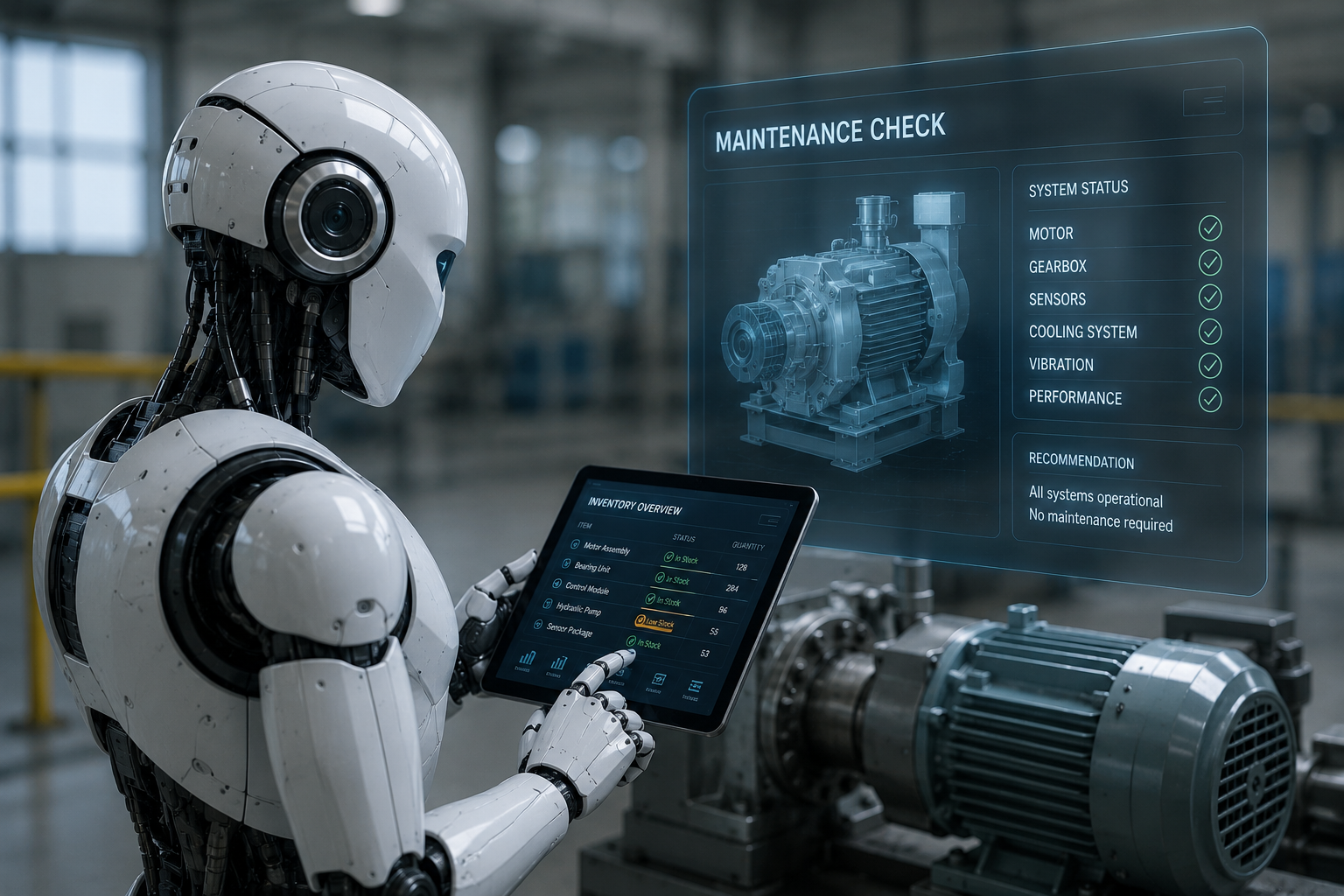
AI agents help manufacturers move from reactive maintenance to a proactive approach by identifying equipment issues before they cause unexpected failures. This allows maintenance teams to address problems earlier, reduce downtime, and improve equipment reliability.
In one analysis, facilities with stronger predictive maintenance practices had 15% less downtime and an 87% lower defect rate.
Improved Quality Control and Fewer Defects
AI agents improve quality control by analyzing production data and identifying inconsistencies that may affect product quality. When combined with technologies such as computer vision and real-time monitoring, they can detect defects, identify patterns behind quality issues, and help manufacturers determine root causes faster.
This allows manufacturers to maintain more consistent production standards while reducing waste caused by defective products or repeated quality issues.
Smarter Production Planning and Scheduling
AI agents make production planning more flexible by helping manufacturers adjust schedules based on changing conditions. They can analyze factors such as demand shifts, resource availability, equipment status, and workforce capacity to recommend scheduling changes.
This enables manufacturers to better allocate resources, balance workloads, and respond quickly when production priorities change.
Supply Chain Optimization
AI agents help manufacturers manage supply chain complexity by analyzing data across inventory, suppliers, demand patterns, and logistics operations. They can improve demand forecasting, identify potential disruptions, and support better coordination between suppliers and internal teams.
This helps manufacturers maintain the right inventory levels, reduce delays, and improve supply chain visibility.
Improved Sustainability and Resource Management
AI agents can help manufacturers reduce waste and use resources more efficiently by analyzing energy consumption, material usage, and production patterns. They can identify opportunities to improve energy efficiency, reduce unnecessary waste, and improve overall resource efficiency.
These insights help manufacturers meet sustainability goals while improving operational performance.
Connected Operations and Improved Visibility
By connecting data from multiple manufacturing systems, AI agents give teams a more complete view of operations and surface relevant insights faster. Instead of manually collecting information from disconnected sources, manufacturers can use AI-driven recommendations to make more informed decisions across production, maintenance, quality, and business operations.
This enables teams to identify issues sooner, coordinate responses more effectively, and adapt quickly to unexpected disruptions.
AI Agent Use Cases in Manufacturing
AI agents in manufacturing are transforming how factories operate by automating decisions, optimizing workflows, and responding to changing conditions in real time. The following examples highlight some of the most common agentic AI applications in manufacturing and how they improve day-to-day operations.
Predictive Maintenance and Equipment Monitoring
AI agents continuously monitor machine data, IoT sensors, and maintenance records to detect early signs of equipment failure. By predicting maintenance needs before breakdowns occur, manufacturers can reduce downtime, extend equipment life, and avoid costly production disruptions.
Automated Quality Inspection and Defect Detection
AI agents can analyze images, sensor data, and production metrics to identify defects in real time. This helps manufacturers improve product quality, reduce waste, and address issues before they impact downstream production.
Dynamic Production Planning and Scheduling
Production schedules often need to change due to equipment issues, supply delays, or shifts in demand. AI agents can evaluate real-time conditions and automatically recommend or implement schedule adjustments to keep operations running efficiently.
Supply Chain and Inventory Optimization
AI agents analyze inventory levels, supplier performance, production requirements, and demand forecasts to support smarter supply chain decisions. This helps manufacturers reduce shortages, optimize inventory, and respond more effectively to changing market conditions.
Energy and Resource Optimization
AI agents monitor energy consumption and resource usage across manufacturing operations to identify opportunities for greater efficiency. By optimizing equipment usage and production processes, manufacturers can reduce operating costs and support sustainability goals.
Workforce and Technical Support
AI agents provide employees with real-time recommendations, troubleshooting assistance, and access to operational information. Rather than replacing workers, they support faster decision-making and allow teams to focus on higher-value tasks.
Multi-Agent Coordination in Discrete Manufacturing
One of the most advanced examples of agentic AI manufacturing is the use of multiple AI agents working together across production lines, robotics, inventory systems, and quality control processes. This type of agentic AI in discrete manufacturing enables different systems to coordinate autonomously, helping manufacturers improve efficiency, respond faster to disruptions, and optimize complex production environments.
Challenges of Implementing Agentic AI Manufacturing
AI agents for manufacturing have clear benefits. However, if you’re not prepared for potential roadblocks, you may struggle to realize their full value.
Here’s what you should know:
Data Quality and Availability
AI agents are only as effective as the data they receive. If manufacturing data is incomplete, outdated, or inconsistent, the agent may struggle to generate accurate insights or recommendations.
Many manufacturers also face data silos, where information is spread across separate systems that don’t communicate well with one another. At the same time, legacy equipment and older software may not capture or share data in a way that’s easy for AI agents to use.
Improving data quality and connecting information across the organization are often important first steps before implementing agentic AI applications in manufacturing.
Integration with Existing Manufacturing Systems
For AI agents to deliver meaningful results, they need to work alongside the systems manufacturers already rely on. This often includes ERP systems, MES, IoT platforms, quality management software, and connected factory equipment.
And it’s no secret that AI integration can be complex, especially when different systems use different data formats or weren’t designed to communicate with one another.
A well-planned integration strategy helps AI agents access the information they need while minimizing disruptions to existing operations.
Cybersecurity and Data Protection
As more manufacturing systems become connected, cybersecurity becomes increasingly important. AI agents often access operational data from multiple systems, making it essential to protect sensitive production information and prevent unauthorized access.
Manufacturers should also secure connected devices, networks, and factory equipment to reduce cybersecurity risks. For highly sensitive environments, AI agents can also use offline models that operate within the factory’s infrastructure, helping keep sensitive production data from being transmitted over the internet.
Establishing strong access controls, monitoring connected systems, and following cybersecurity best practices can help organizations safely deploy AI agents while protecting business-critical operations.
Workforce Adoption and Change Management
Successfully implementing AI agents isn’t just a technology project; it’s also a people project. Employees need to understand how AI agents support their work and how to use the insights they provide effectively.
Providing training helps employees build confidence in working alongside AI systems, while clear communication can help build trust in AI-generated recommendations.
Although AI agents can automate many routine tasks, human oversight remains essential for validating decisions, handling exceptions, and providing expertise in situations that require judgment or experience.
Addressing these challenges early can improve an organization’s AI readiness and make it easier to scale AI agents across manufacturing operations as business needs evolve.
How to Successfully Implement AI Agents in Manufacturing
Implementing agentic AI for manufacturing doesn’t have to be an all-or-nothing project. Starting small, proving value, and expanding over time can help manufacturers reduce risk while building a stronger foundation for long-term success.

Step 1: Identify High-Value Manufacturing Processes
Start by focusing on areas where AI agents can make the biggest difference. Predictive maintenance, production scheduling, and quality monitoring are often good starting points because they involve large amounts of data and have a direct impact on operational performance.
Step 2: Connect Manufacturing Data Sources
To make informed decisions, AI agents need a complete picture of your operations. Connecting data from machines, IoT sensors, ERP and MES systems, and other business platforms allows agents to analyze what’s happening across the production floor in real time.
Step 3: Start with Human-in-the-Loop AI Agents
Instead of letting AI agents make decisions on their own from day one, start with a human-in-the-loop approach. The AI can recommend actions while employees review and approve them, making it easier to build trust and gradually increase automation as teams become more comfortable.
Step 4: Measure Business Impact
As AI agents are introduced, keep an eye on the metrics that matter most. Tracking improvements in downtime, production efficiency, defect rates, and operating costs helps you understand what’s working and where there are opportunities to improve further.
Step 5: Scale Across Manufacturing Operations
Once you’ve seen success in one area, you can begin expanding AI agents to other processes and departments. Taking a gradual approach makes it easier to connect additional workflows, apply lessons learned, and maximize the value of your AI investment.
No two manufacturing operations are exactly alike, which is why Scopic takes a tailored approach. As a leading AI development company, our team works closely with manufacturers to develop and implement AI solutions that align with their goals, systems, and long-term growth plans.
Key Features to Include in Manufacturing AI Agents
Building an effective manufacturing AI agent requires more than just AI capabilities. To deliver meaningful value on the production floor, your solution should include the following features:
- Real-time data processing: Manufacturing environments generate large volumes of data every second. Your AI agent should be able to analyze this information in real time, helping identify issues, adapt to changing conditions, and support faster decision-making.
- Integration capabilities: AI agents are most effective when they can connect with your existing ERP, MES, IoT devices, and other manufacturing systems, allowing them to access accurate data and automate workflows across operations.
- Autonomous decision-making: While human oversight remains important, AI agents should be able to make routine decisions, trigger actions, and execute predefined workflows based on real-time conditions.
- Security and governance: As AI agents gain access to operational data and business systems, they should include strong security, role-based access controls, and governance features to protect sensitive information and support compliance.
- Scalability across operations: Design your AI agent with growth in mind so it can be expanded across production lines, facilities, and additional manufacturing use cases as your business evolves.
Final Thoughts
AI agents are changing the way manufacturers operate, making it easier to improve efficiency, enhance quality, and respond to challenges in real time. While the future of manufacturing will always rely on human expertise, AI agents help teams work smarter and make faster, more informed decisions.
Ready to bring AI into your manufacturing operations?
Explore Scopic’s AI agent development services and discover how we can build a custom solution tailored to your business.
FAQs about Agentic AI Manufacturing
Why are AI agents important in the manufacturing industry?
AI agents help manufacturers improve efficiency by analyzing real-time data, making faster decisions, and reducing costly downtime. By optimizing operations and adapting to changing conditions, they also provide a competitive advantage in an increasingly digital manufacturing landscape.
Can AI agents help with workforce challenges in manufacturing?
Yes. AI agents support employees by automating repetitive tasks, providing real-time insights, and assisting with decision-making, allowing workers to focus on higher-value responsibilities that require human expertise.
How are AI agents different from traditional AI or automation tools?
Unlike traditional automation, which follows predefined rules, AI agents can adapt to changing conditions, make decisions, and take autonomous actions to achieve specific goals. This allows them to respond more intelligently to complex manufacturing environments.

About AI Agents for Manufacturing Guide
This guide was authored by Baily Ramsey, and reviewed by Viet-Anh Nguyen, Machine Learning Lead at Scopic.
Scopic provides quality and informative content, powered by our deep-rooted expertise in software development. Our team of content writers and experts have great knowledge in the latest software technologies, allowing them to break down even the most complex topics in the field. They also know how to tackle topics from a wide range of industries, capture their essence, and deliver valuable content across all digital platforms.